
Mudding is the process used by NFL, College, High School, and even youth level football teams to break in and give a layer of weather resistance to footballs that are fresh out of the box. Most ‘mud’ is made by the same families located in the Deep South, collecting right out of their own backyard! This special mud has proven to be very successful in providing the perfect grip on a leather football that will last over a much longer time than without.
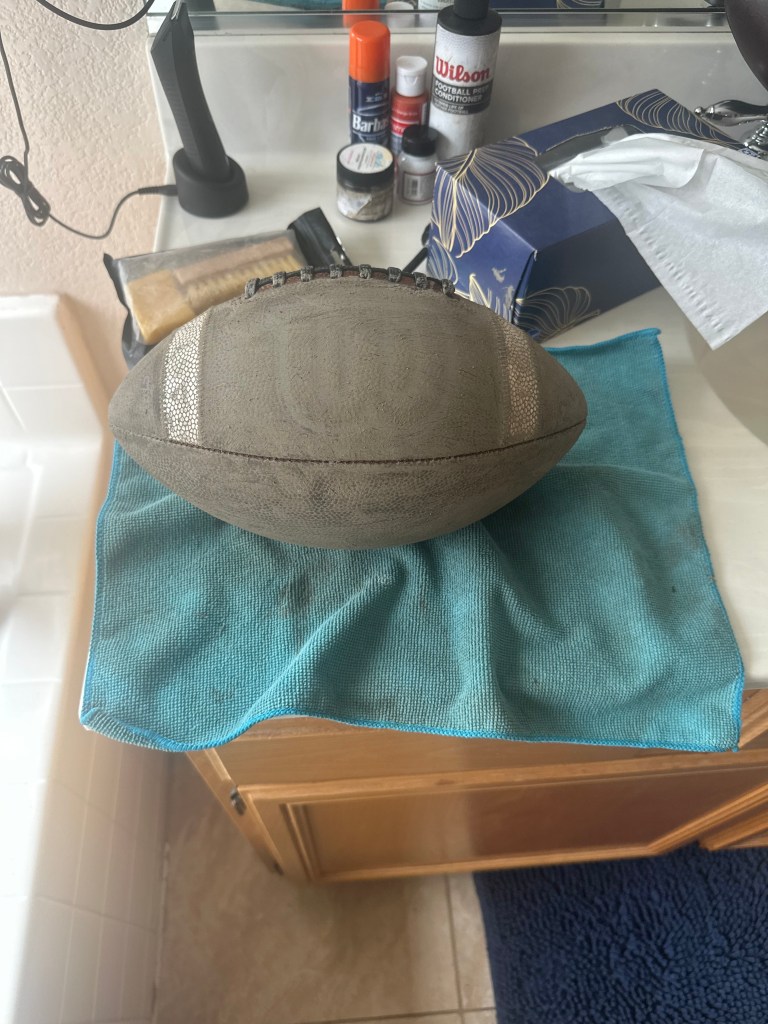
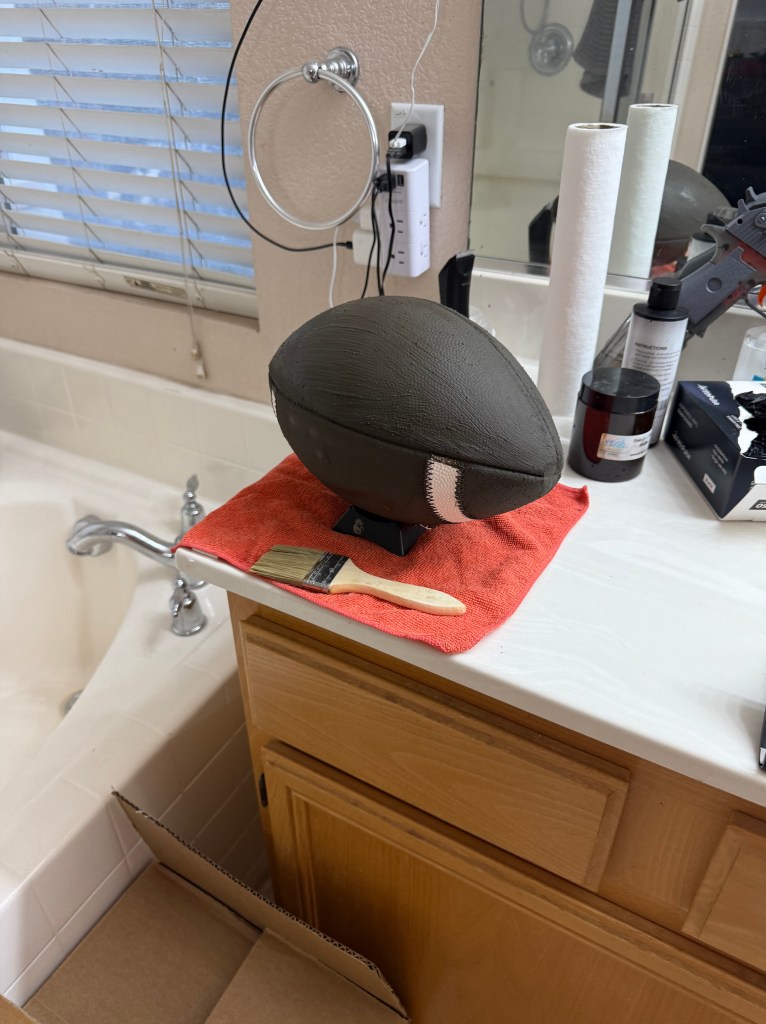
Yes, it’s literally mud, no gimmick or fake substance, straight mud!
The footballs pictured show what that process begins as, and how it’ll end, and it’s normal for this to happen twice as the desired color and coverage is pursued. This process usually lasts overnight or longer, depending on the timeline.
Is that all?
No, there are a few steps before and after the mudding takes place that help prepare the leather to take the mud, and keep it in there.
Shaving Cream
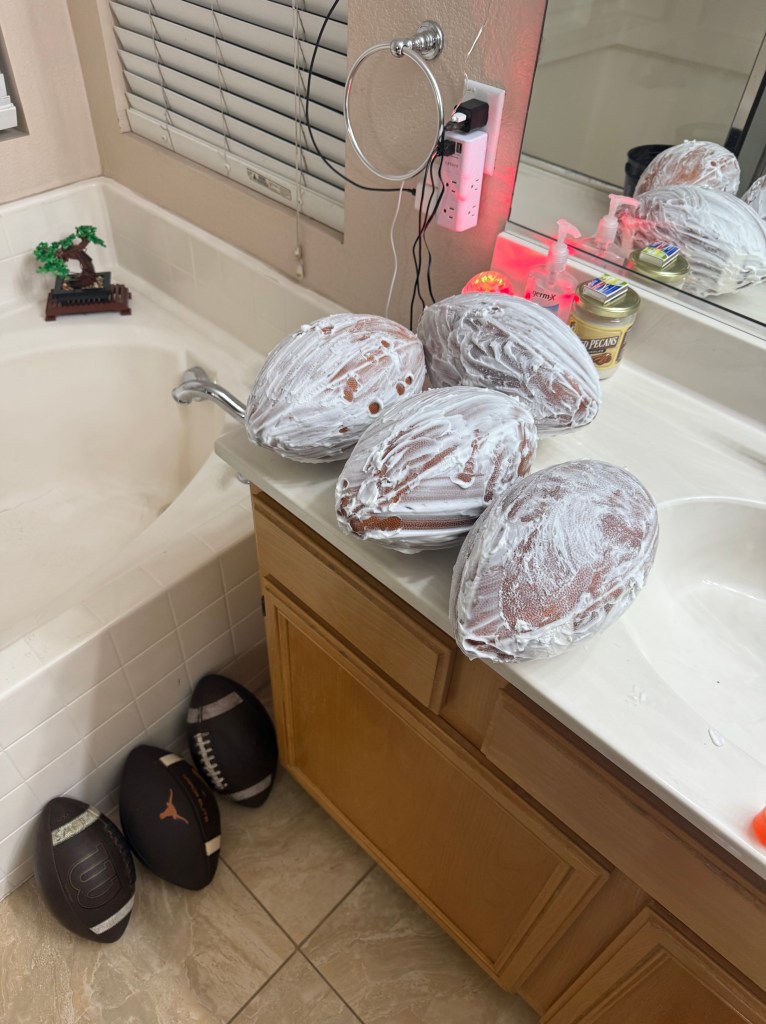
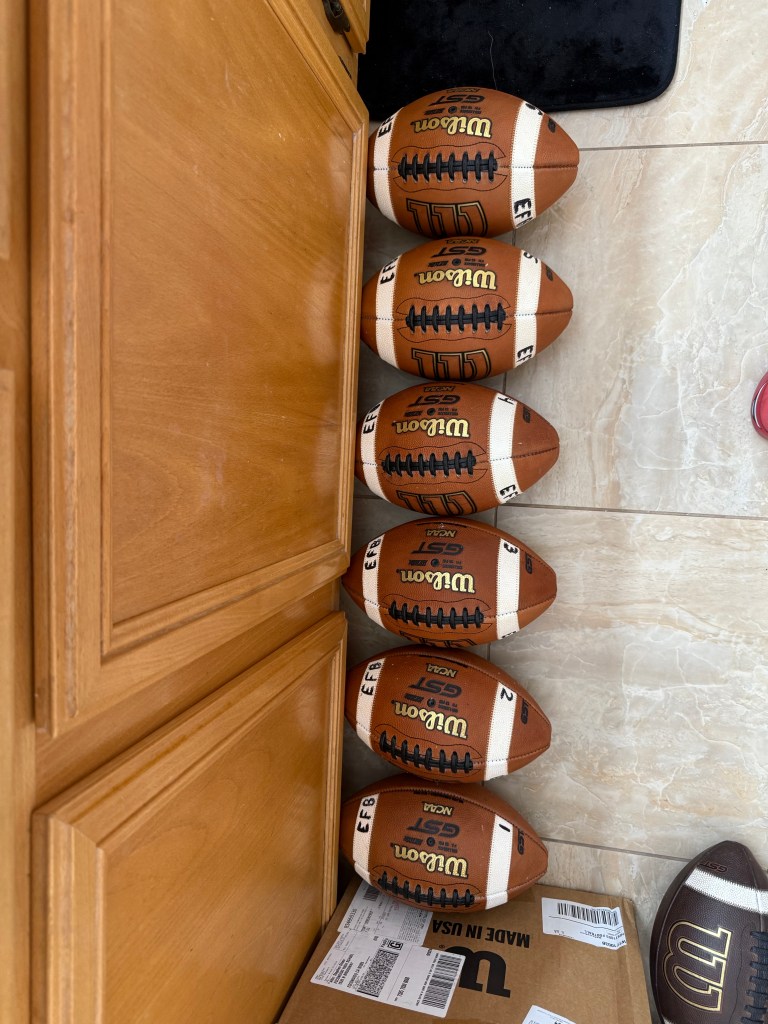
This is one of the lesser appreciated steps, but is one of the most important. Shaving cream is generously spread across the leather’s surface, and is only let to dry for maybe a few minutes before it is vigorously brushed off, allowing the orange or red dye of the leather to be lifted from the roots. It’s then wiped off with a damp rag or Clorox wipe, and can be done as many times as you’d like to get as much color out as possible.
Conditioner Phase 1 (Leather Honey)
(PICTURES PENDING)
Leather honey is what helps rehydrate the leather after the shaving cream. The shaving cream while beneficial to the leathers color and mud retainability, is not good for grip long term. The leather honey feels almost exactly like food honey, thus the name, and is allowed to soak into the leather for a few hours or overnight. This, along with the mud of course, makes it easier to achieve a nice dark brown on the ball, as the leather is similar to your skin, where it will be a nicer color when given lotion.
Conditioner Phase 2 (Prep Conditioner)
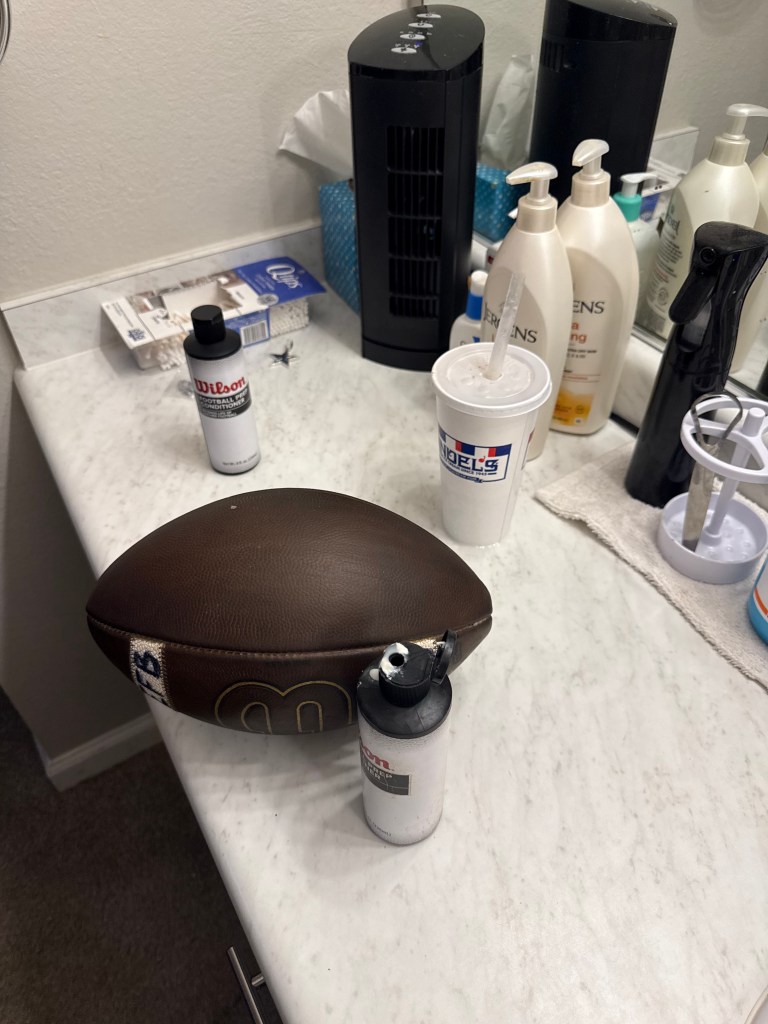
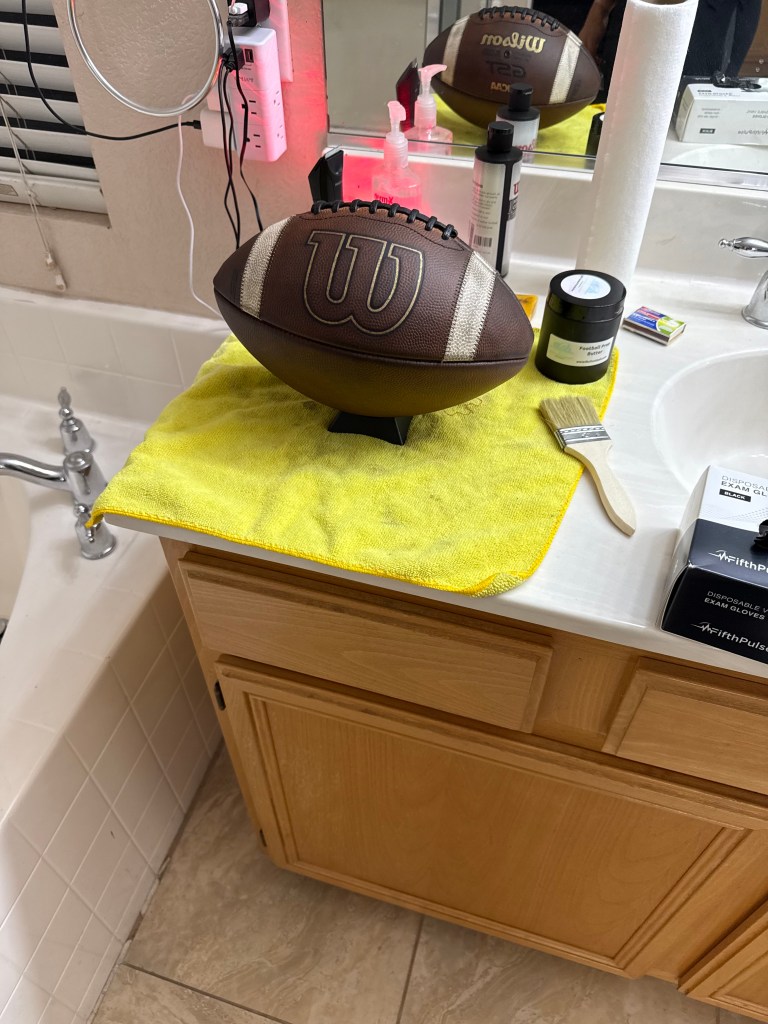
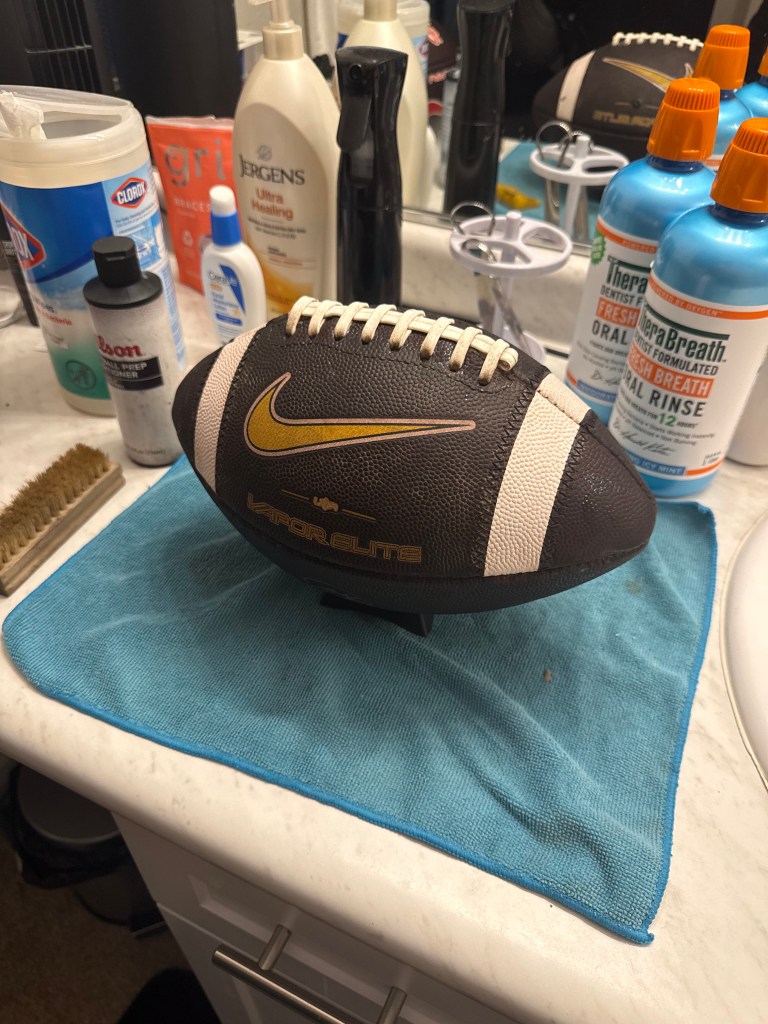
While the leather honey serves more as deep hydration, conditioner is more like lotion than the honey is. It has most to do with the long term grip of the ball, along with preventing scuffing. This can take 3-4 hours per cycle, and is usually done 2-3 times on freshly mudded balls, and only once or twice on used balls. This all depends on the previous condition of the ball.
Tack Bar (Final Step)
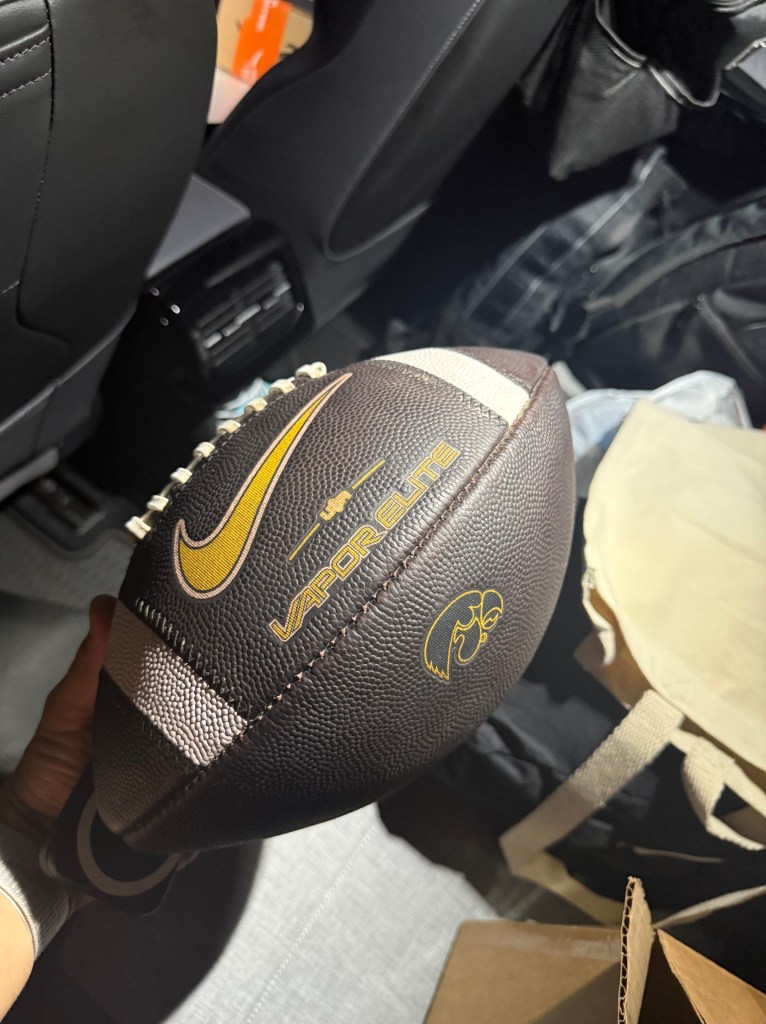
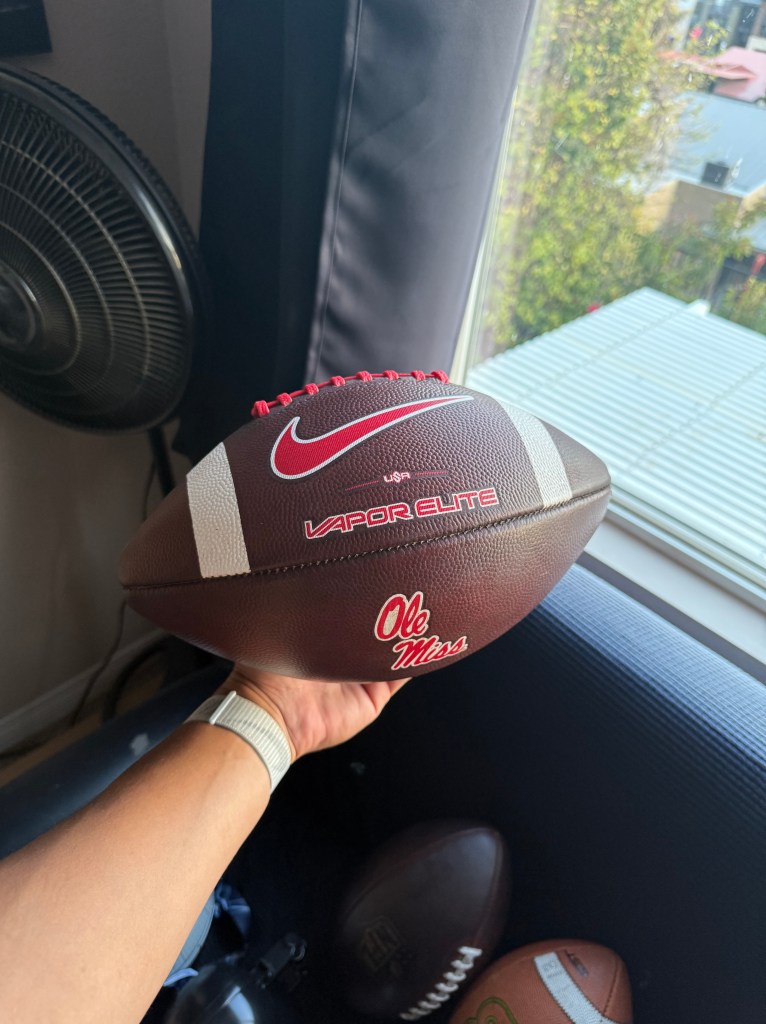
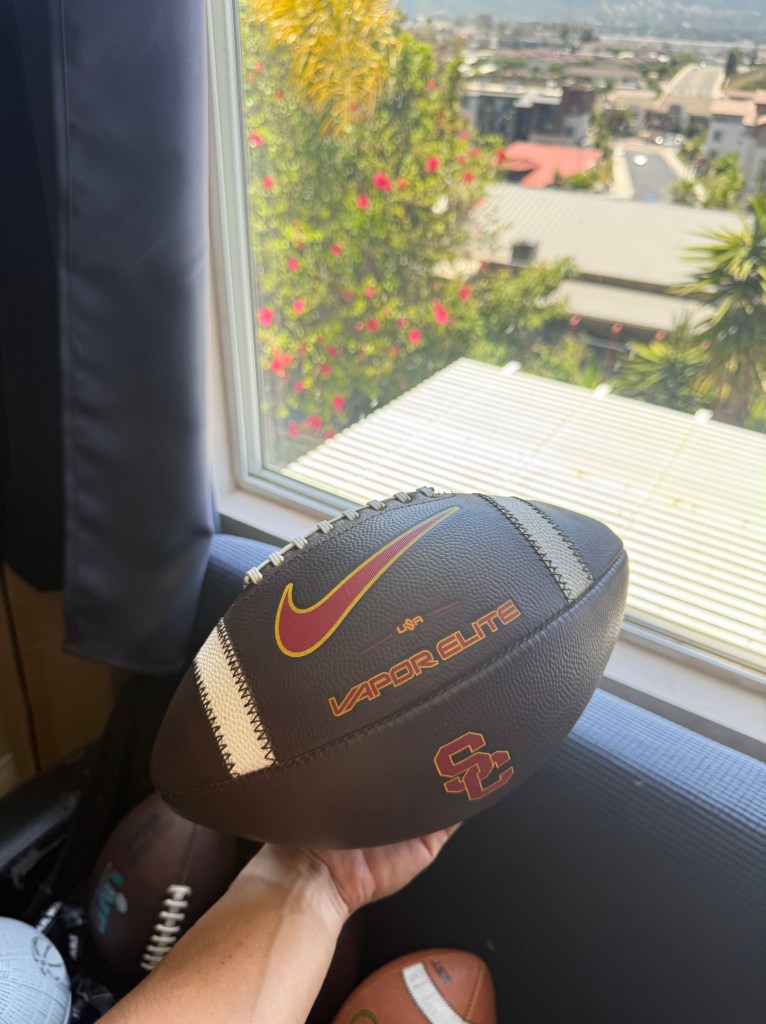
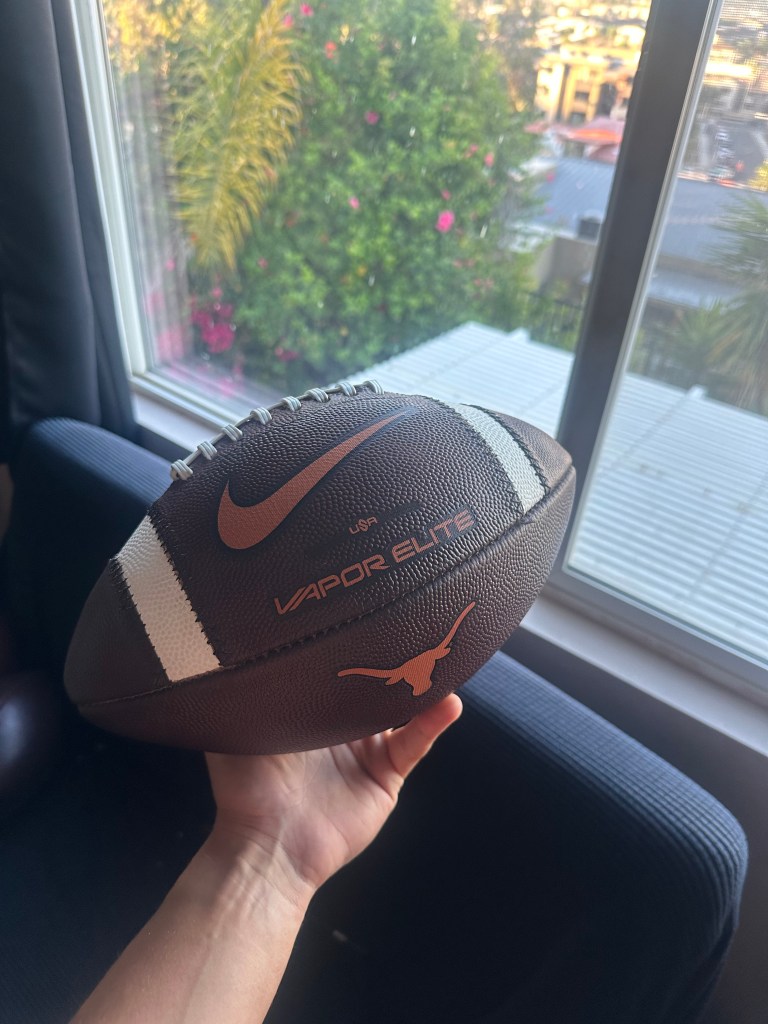
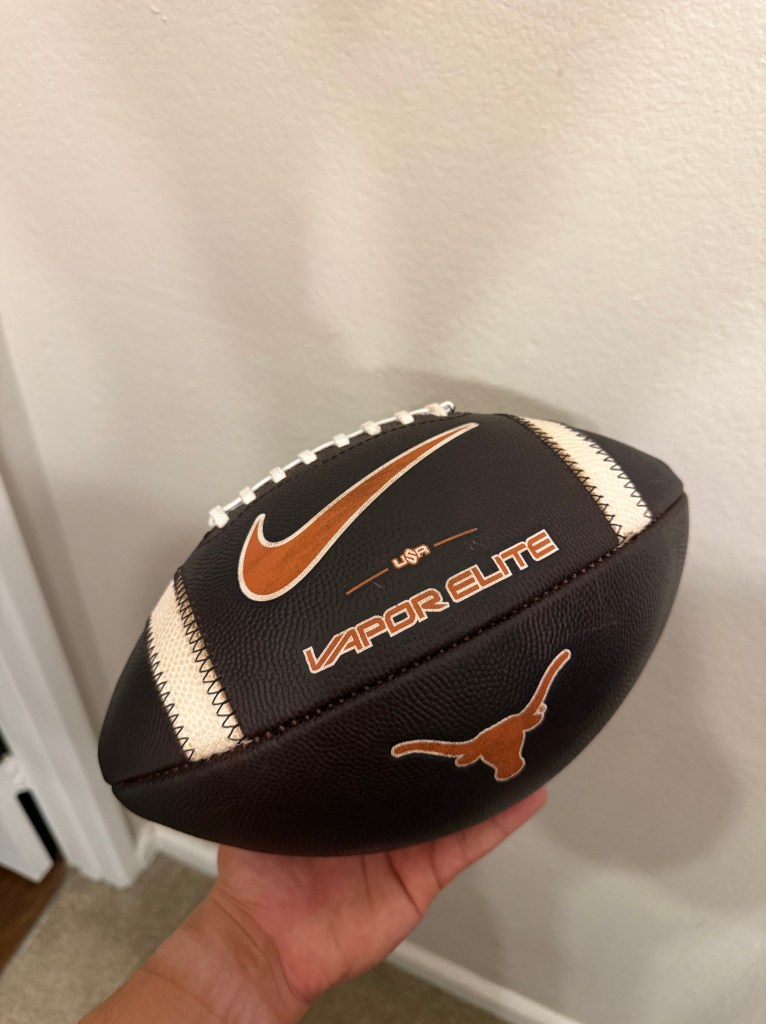
The last and final step is thankfully one of the easiest initially, and the easiest to maintain. The tack bar is what gives the football its final layer of protection & grip, along with a shiny finish you might see on TV.
 MUDZ Football Mud& Conditioning